My research is focused in two main areas of U.S. politics – elite political behavior and women’s political candidacy. I am presently working on a book project that examines the contributions of women legislators to the Virginia General Assembly.
Elite Political Behavior and the Convention Delegate Study (CDS)
Since 2004 I have served as a Principal Investigator for the Convention Delegate Study (CDS), a survey of Democratic and Republican delegates who attend their party’s national conventions to approve the party’s platform on issues and formally nominate the party’s candidates for President and Vice President. The CDS is the longest-standing survey of U.S. party activists. In various projects, we find that party activists have facilitated the polarization of the Democratic and Republican parties along multiple issue dimensions. We also find evidence of distinct factional groups within the Democratic and Republican parties who compete with one another to pursue policy or office seeking goals. My work from the CDS project has been published in the American Political Science Review, American Politics Research, and Party Politics and has appeared in the London School of Economics U.S. Politics & Policy (LSE USAPP) blog.
Abstract: Hillary Clinton and Donald Trump secured their respective party’s 2016 nominations only after raucous, spirited debates among delegates at the start of each party convention. Groups and their preferred candidates behaved consistently with the policy demanders view of parties, which identifies parties as comprised of coalitions of groups with strong policy preferences that negotiate with one another for influence in the party decision-making and policy process. Using the 2016 Convention Delegate Study, the longest standing survey of Democratic and Republican Party activists, we examine intra-party groups as new delegates are folded into the framework along with returning delegates. We assess how the theory of parties as comprised of policy-demander groups works in a context of high external party polarization. The competition between these groups to recast their party in its preferred image in the absence of a standard party bearer for either party holds important implications for Democrats and Republicans in future presidential and congressional elections.
London School of Economics American Politics & Policy post, February 2021: Party activists may determine the future of the Republican Party
Abstract: Parties need to win elections, but they also heed the policy preferences of activists to provide the incentive to mobilize. Moving beyond the debate as to whether parties as a whole are policy or office driven, we examine groups within parties and identify different factions that place differential emphasis on office-seeking versus policy-demanding. Using data from the 2012 Convention Delegate Study of Democratic and Republican Party national delegates, we identify distinct factional groups within each party. We map these factions within each party, finding policy-driven and office-driven factions of delegates in both Republican and Democratic parties. We evaluate each group’s response to political and party involvement, support for the larger party organization, and response to both intra- and interparty conflict. Finally, we make clear the picture of factional relationships within each party by accounting for how factional goals are integrated into the party organization over time.
Abstract: Party activists have played a leading role in “conflict extension”—the polarization of the parties along multiple issue dimensions—in contemporary American politics. We argue that open nomination systems and the ambitious politicians competing within those systems encourage activists with extreme views on a variety of issue dimensions to become involved in party politics, thus motivating candidates to take non-centrist positions on a range of issues. Once that happens, continuing activists with strong partisan commitments bring their views into line with the new candidate agendas, thus extending the domain of interparty conflict. Using cross-sectional and panel surveys of national convention delegates, we find clear evidence for conflict extension among party activists, evidence tentatively suggesting a leading role for activists in partisan conflict extension more generally, and strong support for our argument about change among continuing activists. Issue conversion among activists has contributed substantially to conflict extension and party commitment has played a key role in motivating that conversion.
Women’s Political Candidacy in the U.S.
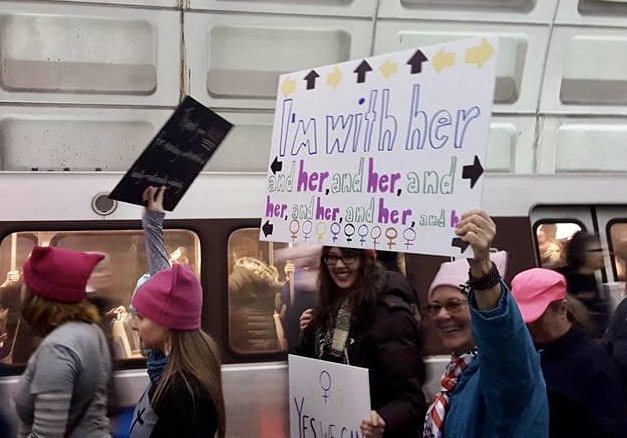
My other area of research examines women’s political candidacy to the U.S. Congress and state legislatures. Women comprise half of the population in most political systems and yet are often significantly underrepresented as candidates to and officeholders in legislatures whose members make laws and policies on behalf of the people they represent. In the U.S. Congress, women currently account for about 25 percent of the membership body, but this figure masks the yawning gap between women Democrats and Republicans, as women Democrats outnumber their Republican counterparts by more than three to one. My research explores how recruitment efforts by parties and the campaign finance networks available to women candidates contributes to the party gap in representation and to women’s underrepresentation more broadly. My work on women’s political candidacy has been published in the Journal of Politics, Journal of Women, Politics & Policy, and, P.S.: Political Science & Politics and multiple edited volumes.
Abstract: In this collection of essays for which we served as guest editors, scholars examine the campaign and governing experiences of rightist women in comparative democratic political systems.
Abstract: Although 2018 has been called another “Year of the Woman,” increases in women’s representation that year were party-specific. Historically, women’s organizations fought to expand women’s representation in both parties; however, the fruit of these efforts is currently concentrated among Democrats. Indeed, women contributed funds in record numbers in 2018, but the majority of women donors supported Democratic women candidates (Haley 2018), and liberal women’s political action committees (PACs) played a prominent role in raising those funds.
Abstract: Why do Democratic women seek and hold office more frequently than Republican women? We use an original survey of donors to party campaign committees and women’s political action committees to answer this question. We theorize that the intense policy demanders in each party have built party cultures with substantively different orientations toward women’s political involvement. These cultures shape party elites’ behavior and influence responsiveness to a newly defined policy-demander group—women’s representation policy demanders (WRPDs)—whose primary goal is to increase women’s political representation. We reveal that Democratic elites’ political activity and financial contributions are significantly more motivated by WRPD concerns than are Republicans. We also show that WRPDs like EMILY’s List and Susan B. Anthony List are far more integrated into Democratic than Republican party coalitions. Thus, we reveal both the continued existence of distinct party cultures and the consequences of this distinction for women’s representation.
Mischiefs of Faction blog post on Vox.com, October 2018: It’s a big year for women candidates – why are so few of them Republican?